Eco-Friendly Fabric Options: A Practical Guide
A fabric can sound sustainable and still be a poor choice for a garment you rarely wear or cannot easily care for. When you’re comparing materials, the most useful question isn’t “Which fiber is greenest?” It’s “Which fabric suits this piece, will last in my wardrobe, and comes with claims I can evaluate?” We use those questions to make fabric choices more practical—and to avoid treating any one label as a complete answer.
Start with the garment, not the label
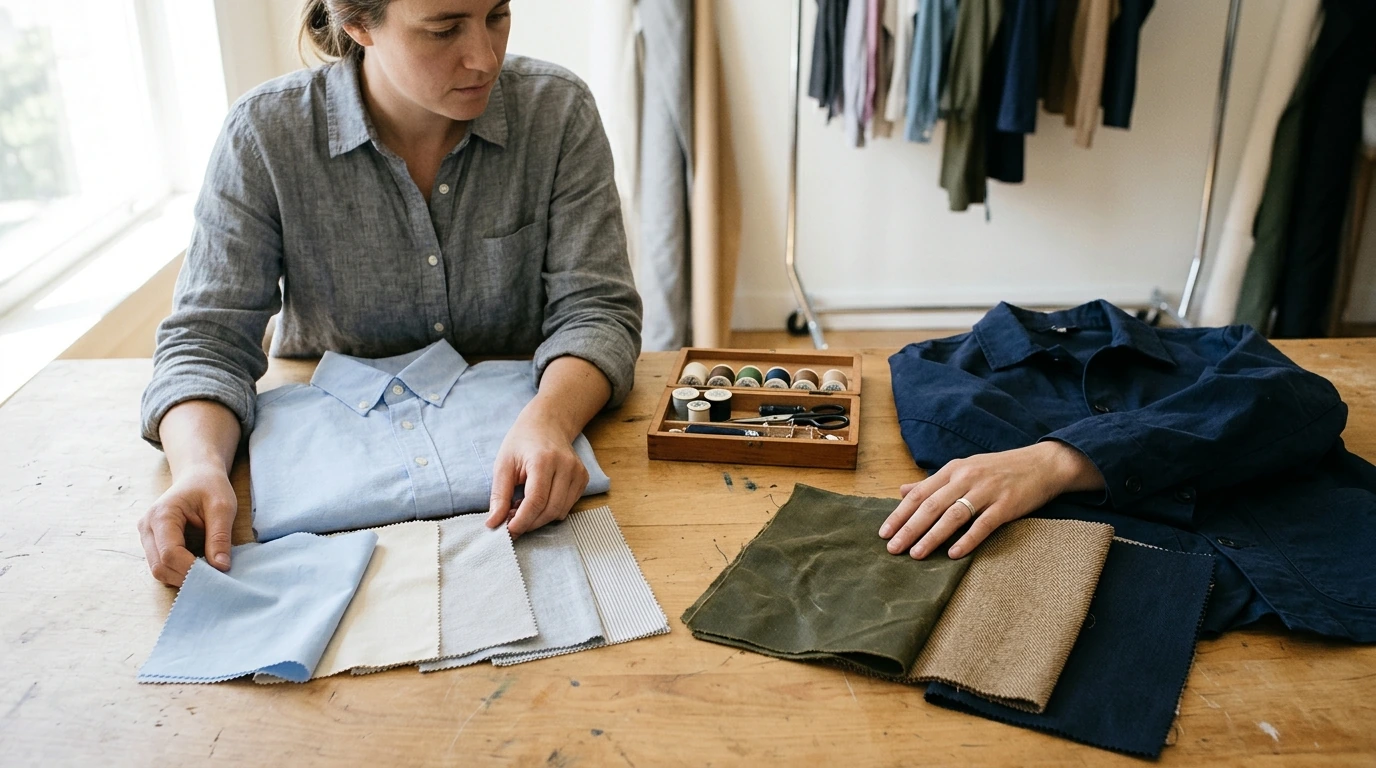
Picture an everyday shirt and an occasional jacket. For the shirt, comfort through frequent wear and manageable laundering may be priorities. For the jacket, you might put more weight on structure, durability, and whether it works with clothes you already own. The same fabric does not have to win both decisions.
Before comparing fibers, name what you need the finished garment to do. Will you wear it weekly or a few times a year? Can you follow its care instructions without making the item a burden? Do you like its feel enough to reach for it? A material with appealing sourcing credentials is less useful to you if the garment wears out quickly, demands care you won’t provide, or stays in your closet.
Fiber type matters, but it is only one part of the picture. Manufacturing, dyeing, finishing, garment construction, care during use, and eventual disposal all affect the decision. You may not have complete information about every stage. You can still make a better comparison by identifying what you know, what you can verify, and what remains unclear.
Compare familiar fabrics without looking for a perfect winner
Use this table as a starting point, not a universal ranking. Sourcing and production methods vary within every fiber category, and the best option depends on the garment you plan to wear.
| Fabric option | Potential appeal | What to check |
|---|---|---|
| Organic cotton | A plant-based option for familiar, breathable garments | The scope of any organic certification, fabric weight, and expected lifespan |
| Linen | A breathable fiber that may suit warm-weather staples | Texture preferences, care needs, and how often you will wear it |
| Recycled polyester | Can use recycled feedstock while retaining polyester’s performance qualities | Recycled-content verification, durability, and microfiber-shedding considerations |
| Lyocell | A cellulosic fiber that can offer a soft drape | Fiber sourcing, processing claims, and care instructions for the finished garment |
Notice how the questions change with your plans. Linen’s texture might be welcome in a relaxed summer shirt but less appealing if you prefer a smooth, crisp feel. Recycled polyester content can be relevant to an active garment, while it does not, by itself, tell you how well that garment is made. Organic cotton describes something about fiber production when the claim is substantiated; it does not automatically describe every component or process in a finished shirt.
The Textile Exchange Materials Market Report provides broader context on fiber production and materials. Its market-level information can help you understand categories, but it cannot decide whether a particular garment fits your needs. For that, you still need garment-specific details and your own expectations for wear.
Read sustainability claims with a clearer eye
Specific language gives you more to work with than a broad word such as “eco-friendly.” A stated fiber percentage, a named certification with an identifiable scope, or a clearly described recycled-content claim offers a question you can follow up on. A vague claim offers much less.
Pay particular attention to what the claim covers. A statement about one fiber in a fabric is not necessarily a statement about the dyes, trims, sewing, packaging, or entire finished garment. Likewise, a certification may apply to a material, a process, or a product under particular criteria. If those boundaries are not clear, resist filling in the gaps yourself.
The FTC’s guidance on environmental marketing claims explains why clear, qualified claims matter. You do not need to become a certification expert to shop thoughtfully. Start by asking: What exactly is being claimed, what part of the item does it describe, and is there enough detail for me to assess it?
Build a shortlist you can actually use
We suggest a four-step approach. First, name the garment and its purpose: an often-worn shirt, a warm-weather layer, or something else specific. Second, shortlist two or three fabrics that could serve that purpose. Third, compare how each option feels, wears, and needs to be cared for. Finally, examine the supporting claims before letting a sustainability label influence your choice.
If you want a dedicated resource while exploring those options, our Eco-Friendly Fabric Options Bundle: 3-in-1 Guide for Sustainable Fashion Lovers gives you a place to continue that consideration. Keep your intended garment in mind as you use any guide: the goal is a workable choice, not an abstract winner.
The same habit applies when you’re considering a finished item rather than buying fabric. For example, if our New Balance M2002RIB Black Leather Sneakers catch your attention, begin with whether you need and will wear that pair. Then look for material and care details relevant to the complete shoes. A material named in a product title is not, on its own, an environmental claim about the whole product.
FAQ
Is natural fabric always more sustainable than synthetic fabric?
No. Compare the specific material, how it was produced, and the finished garment’s durability, care requirements, and likely use rather than treating fiber origin as a complete answer.
What should I check before trusting an eco-friendly fabric claim?
Look for a specific claim and its scope, along with relevant fiber percentages or certification details. Consider whether the available information lets you assess what is actually being claimed.







Leave a comment